Quantum Physics

Through the Window of Opportunity
Through the Window of Opportunity

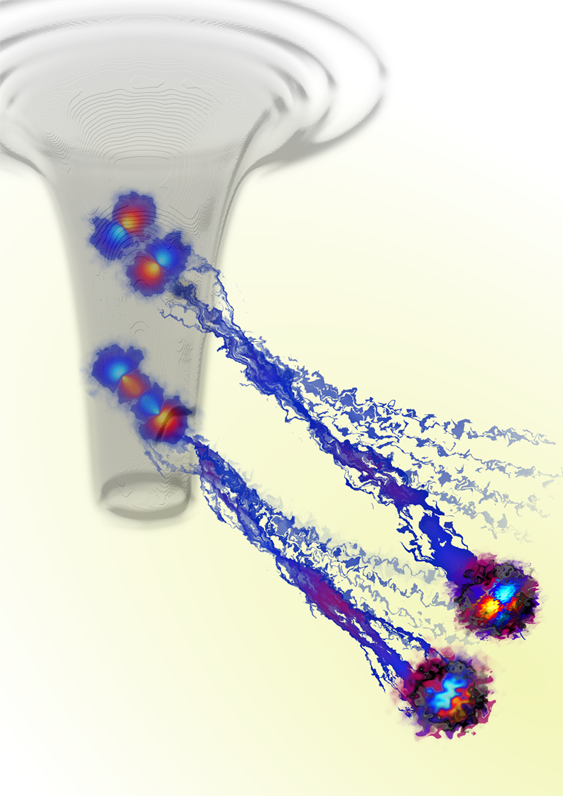
In certain situations, an electron can occasionally pop out of its home in the atom and “explore” the outside world. This “escape” is a quantum phenomenon called tunneling, which arises from the fact that such quantum particles as electrons can also act as waves. Weizmann Institute scientists have developed an original method to observe the phenomenon of quantum tunneling and precisely measure the difference between the tunneling times of electrons with different energy levels. They succeeded in measuring a difference of 50 attoseconds (a billionth of a billionth of a second) – apparently among the shortest periods of time ever measured. Insights that emerge from this research may contribute, in the future, to the development of powerful new technologies.
read more...

Tiny Vibrations

Tiny Vibrations

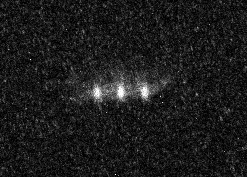
Using the rules of quantum mechanics, Weizmann Institute scientists built a quantum version of a device commonly found in physics labs. The quantum locked-in amplifier enables researchers to isolate and measure the frequency of electric waves from background noise using the spin of a single atom (ion) alone. The sensitivity of their measurements was extremely high: around 100 times better than any previous measurement. These measurements allow a high spatial separation of several billionths of a meter. A locked-in amplifier singles out the specific wave from the rest of the noise, “locking on” to the required signal and enabling scientists to make a great variety of accurate measurements.

read more...

Spinning off DNA

Spinning off DNA

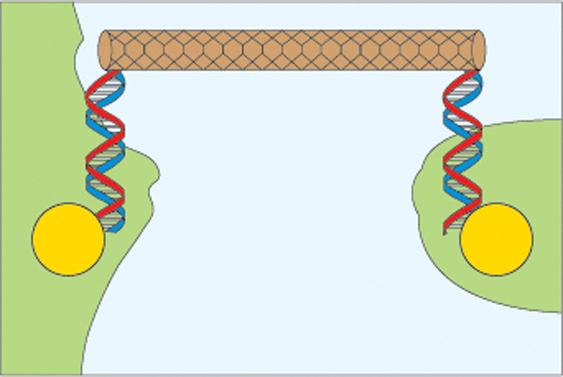
Weizmann Institute scientists and colleagues have shown that DNA – a very large biological molecular – can discern the quantum state of a subatomic particle such as an electron. The quantum phenomenon of spin exists in two opposing states (“up” and “down”). Spin states do not occur within biological molecules, but these have their own form of direction: They are chiral, existing in either “left-” or “right-handed” forms that can't be superimposed on one another. The researchers exposed DNA molecules to groups of electrons with both directions of spin. The scientists found that the biological molecules reacted strongly with the electrons carrying one of those spins, and hardly at all with the others. Their findings imply that the chiral nature of the DNA molecule somehow “sets the preference” for the spin of electrons moving through it.

read more...

The journey into the unknown

Weizmann institute scientists embark on a fascinating journey into the unknown, it their endeavor to better understand nature and our place in it.

In this station, you will see some the richness of the research fields in which our scientists work, as well as some of the new insights and discoveries that will shape our future.