Particle Physics

Discovery of the Higgs Boson
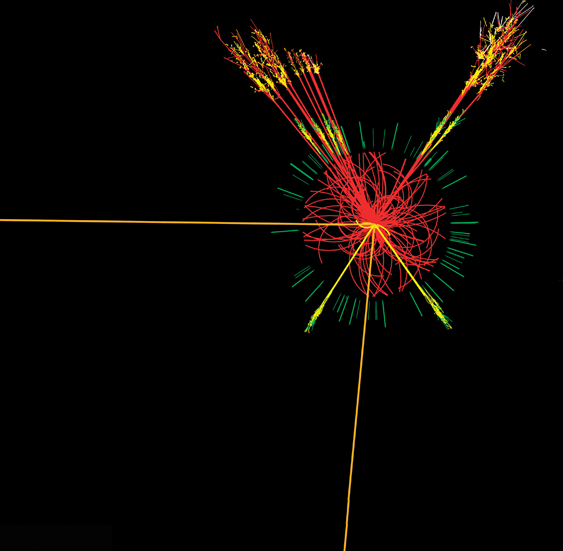
Discovery of the Higgs Boson

Weizmann Institute scientists have been prominent participants in the long and complicated journey to detect the Higgs boson. The Higgs boson is the final building block that has been missing from the Standard Model, which describes the structure of matter in the universe. Among other things, the particle is also responsible for the existence of mass in the elementary particles. In the effort to discover the Higgs boson and understand the origin of mass in the universe, scientists built the world's largest machine: a particle accelerator nestled in a 27-km-long circular tunnel, 100 meters beneath the border between France and Switzerland, in the European particle physics laboratory, CERN, near Geneva. Among other things, a number of detectors installed in the particle accelerator were developed at the Weizmann Institute of Science.
read more...

Pulling the Strings

Pulling the Strings

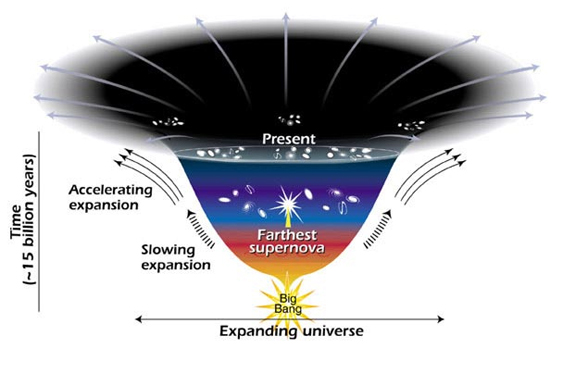
A team of scientists at the Weizmann Institute hope to prove that all particles making up the universe, including a sought-after particle underlying gravity (the graviton), are created by the vibration of strings as they move, unite, and separate. If successful, the Standard Model – so far the most substantiated theory on the structure of matter in the universe – may finally be reconciled with another highly acclaimed theory, Einstein's General Theory of Relativity, which explains gravity. Currently these two landmark achievements don't get along too well. String theory requires that the universe possesses 11 dimensions. This leaves two options: It is either impossible to apply string theory to our four-dimensional universe or our universe may indeed consist of 11 dimensions, with seven of them beyond our perception. Physicists working on string theory have shown that this second option is in fact conceivable as long as one is willing to accept that the extra seven dimensions exist in a “folded” form next to the familiar four. According to their calculations, if these additional, folded dimensions are very small, their existence will not contradict the observed picture of material reality.

read more...

Capturing Cancer

Capturing Cancer

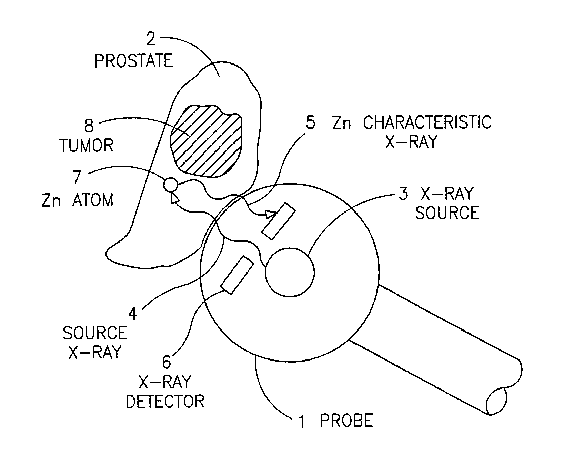
Weizmann Institute scientists and research partners have developed a new approach to diagnosing prostate cancer. The method is based on findings that the concentration of zinc is low in advanced prostate cancer. The research team wanted to know whether a prostate zinc deficiency could be identified in earlier stages of cancer. They developed a non-invasive probe to measure the concentration of zinc in biopsy samples with X-ray-based elemental analysis. Using this method, the scientists were not only able to determine whether the tissue in certain areas is cancerous or healthy, but they were also able to establish the degree of tumor aggressiveness, its size and the exact location in the prostate gland.

read more...

The journey into the unknown

Weizmann institute scientists embark on a fascinating journey into the unknown, it their endeavor to better understand nature and our place in it.

In this station, you will see some the richness of the research fields in which our scientists work, as well as some of the new insights and discoveries that will shape our future.