
Alternative Energy

Saving Up Sunshine

Saving Up Sunshine

Wind and sun are clean, renewable sources of energy but, unfortunately, they're not always able to deliver power when and where it's needed. Weizmann Institute scientists have developed a unique method for converting solar energy into fuel. The method is comparatively inexpensive, produces no environmentally hazardous waste and is very efficient. It uses solar or wind energy to convert polluting carbon dioxide CO2 to carbon monoxide (CO) – a non-corrosive gas that can be burned directly in turbines or generators, or converted on-site into liquid fuel.

read more...

Just Add Water

Just Add Water

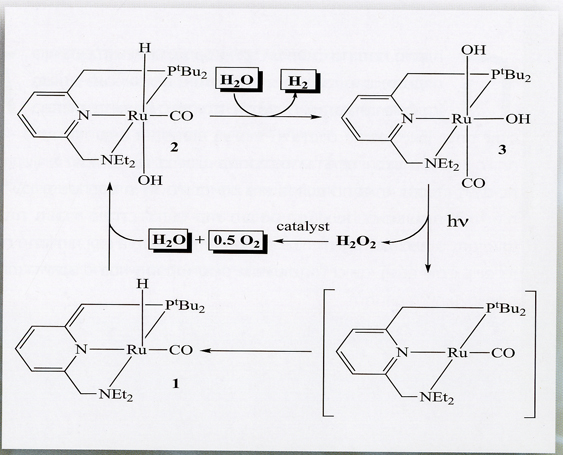
Splitting water into its components – hydrogen and oxygen – using sunlight could be the ultimate method of clean energy production. But it is anything but simple. Such systems represent the first steps toward obtaining a clean, sustainable source of hydrogen for fuel. An important step in addressing this problem has been made by Weizmann Institute scientists who have developed a unique approach in the splitting of water molecules. Their method involves a series of chemical reactions, driven by light and heat, which lead to the release of oxygen and hydrogen. Another participant in the splitting process is a “smart” synthetic complex composed of a metal center and an organic (carbon-based) component developed by the scientists. Once the process is complete, the metal complex is able to revert back to its original state, and be recycled for use in further reaction.

read more...

Sensing Trouble

Sensing Trouble

A tiny sensor that uses organic molecules to detect problems – from asthma to hidden explosives – has been developed by Weizmann Institute scientists. The sensor detects minuscule amounts of substances, but these can yield mountains of information. For example, it can detect the level of nitrous oxide in exhaled breath, which can reveal whether a person is having an asthma attack; or identify certain molecules near a person that may indicate they are carrying explosives. The sensor may, in the future, be used to detect environmental pollutants, banned materials and biological molecules.

read more...

Going for Green

Going for Green

The efforts involved in trying to find such alternatives as biofuels to today's polluting, non-renewable oil, such as biofuels, cannot be emphasized enough. Weizmann scientists believe that one such alternative may be found in oceans and ponds: algae. Algae can be grown in areas unsuitable for growing food plants as well as in salt water. They grow quickly and produce no waste. Certain strains of algae can produce oil in amounts of up to 50% of their mass, which can easily be turned into biofuel. Research by Weizmann scientists focuses on a number of strains of algae and the biochemical processes involved producing the oil in order to develop strains to do so.

read more...

The journey into the unknown

Weizmann institute scientists embark on a fascinating journey into the unknown, it their endeavor to better understand nature and our place in it.

In this station, you will see some the richness of the research fields in which our scientists work, as well as some of the new insights and discoveries that will shape our future.