Evolution

Darwin's Finch and the Evolution of Smell
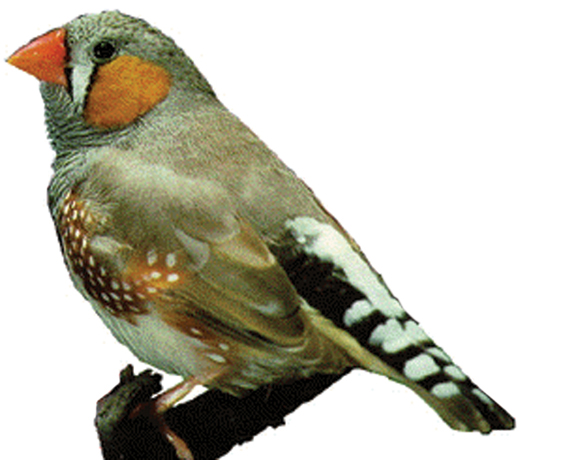
Darwin's Finch and the Evolution of Smell

Darwin's finches – some 14 related species of songbirds found on the Galapagos and Cocos Islands – will forever be enshrined in history for having planted the seeds of the theory of evolution through natural selection. Today, more than 150 years after Darwin's famous book, finches can still teach us a lesson about evolution. A large, international group of researchers, including Weizmann scientists, produced the full genome of the zebra finch and analyzed it in detail. The Weizmann scientists mapped the genes encoding the finch smell receptors in order to answer the question: Do birds have a developed sense of smell? Their findings support the claim that some birds do rely on the sense of smell.

read more...

Picking Up Speed

Picking Up Speed

Mutations drive evolution: They alter gene sequences, tweaking the function of their protein products and assuring the adaptability of organisms to ever-changing environments. But scientists who try to evolve proteins in the test tube do not fare as well. Weizmann Institute scientists found that the key to solving the problem is a family of proteins called Chaperones, which help proteins fold into the correct 3-D structures – a crucial stage in the functioning of the protein. When the scientists introduced random mutations in selected enzymes, both in the presence and absence of chaperones, they showed that the chaperones were able to save about one-third of the mutated proteins that would otherwise have perished. This, in turn, enabled proteins to acquire twice as many mutations, promoting genetic diversity and accelerating the rate at which they acquired new functions through generations of evolution. The ability to evolve proteins in the laboratory – so-called “directed evolution” – provides a powerful means for engineering tailor-made enzymes (proteins that speed up chemical reactions) with novel properties for a range of industrial, biotechnological and medical applications.

read more...

It Pays to Plan Ahead

It Pays to Plan Ahead

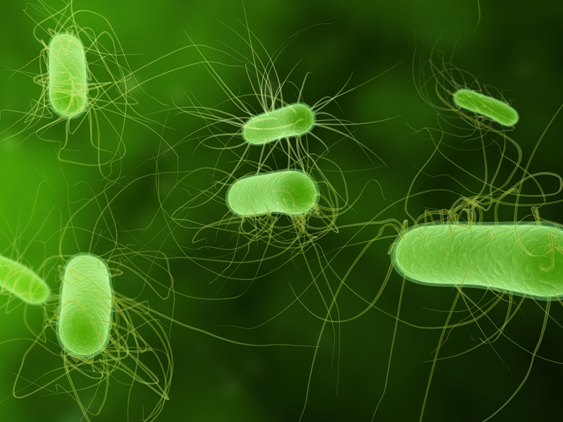
Bacteria are able to anticipate the future and even prepare themselves for the next stage – similar to how animals can be taught to anticipate events through conditioned learning. Experiments carried out by Weizmann Institute scientists on bacteria and yeast have shown that the gene networks of these organisms are able to learn the order of appearance of different nutrients, or cyclical changes in their environment, and react accordingly. In the case of the microorganisms, evolution over many generations replaces conditioned learning, but the end result is similar – the organism adapts its responses to environmental cues, improving its ability to survive.

read more...

The journey into the unknown

Weizmann institute scientists embark on a fascinating journey into the unknown, it their endeavor to better understand nature and our place in it.

In this station, you will see some the richness of the research fields in which our scientists work, as well as some of the new insights and discoveries that will shape our future.